Insights
Attribution, for businesses that close offline.
What we have learned reconciling closed sales against lead sources — the methods, the failure modes, and the numbers that survive a finance review.
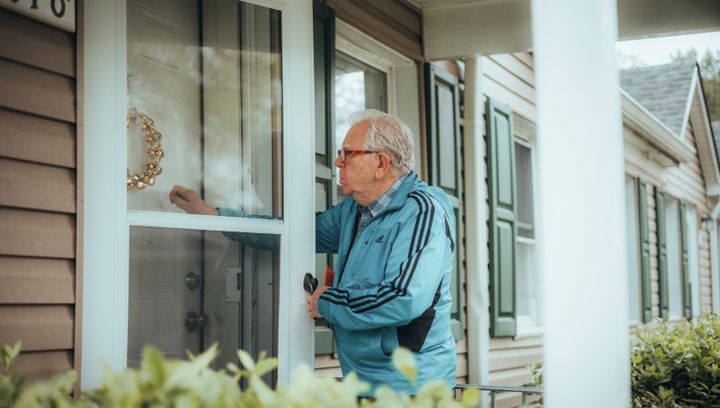
Nextdoor bills impressions. Judge it by the neighbors who paid you
Nextdoor sells local businesses ads billed on impressions, clicks or a monthly subscription, and reports impressions, clicks and, at most, a count of conversions inside a seven-day window. None of those is a customer. Here is what each Nextdoor product bills and reports, which ones hand you a contact detail you can follow to a sale, why the free recommendations must be kept apart from the ads, and how to price Nextdoor by the customers who paid.

Yelp counts a bookmark as a lead. Judge it by the customers who paid
Yelp's dashboard counts a customer lead whenever somebody visits your page and does almost anything: calls, taps for directions, clicks to your website, even bookmarks you. You pay for ad clicks, priced at auction. Neither number is a customer. Here is what each Yelp metric actually measures, why its calls and quote requests rarely arrive with a contact detail you can match, and how to price Yelp by the sales it closed.

Circulation is not customers: how to measure what print advertising earns
Newspapers, magazines, community weeklies, trade journals and inserts are sold on circulation, and circulation is a count of copies. The revenue a print ad produces can be measured, publication by publication, if every placement gets a door no other channel uses and the leads that come through it are matched to closed sales. Here is how, with the arithmetic, and an honest account of what print will never show you.

Radio reaches almost everyone and leaves almost no trace. Measure it with your sales, not the spike
Radio reaches more American adults each month than any other medium, mostly in the car, hours before anybody can act on what they heard. That is why the minute-by-minute spike charts radio is usually judged by miss most of what it does. For a business that closes by phone or in person there is a sturdier route: a number read only on air and matched to closed sales, a question asked of every new customer, and a schedule that switches on and off so the rest can be seen.

Word of mouth is probably your biggest channel. Stop hiding it in everyone else's numbers
A customer who buys because a neighbor recommended you leaves no click, no tracking number and no campaign. In an attribution report that customer lands in Direct / Unknown, or worse, gets credited to the branded search they used to look up your phone number. Here is why referral revenue disappears, how to measure it honestly with a question, a code and a source column, and why spreading it across your paid channels is the one fix that makes everything worse.

Attribution tells you who. Only a holdout tells you whether.
Attribution answers which source a customer came through. It cannot answer whether that customer would have bought anyway, and for branded search, retargeting and every channel that reaches people already on their way to you, that is the question that decides the budget. Here is what an incrementality test is, when one is worth running, how a geographic holdout works with your own sales data, and how its answer fits beside an attribution report rather than replacing it.

One customer, three leads: deduplicate before you credit anyone
The same person fills in a form from a Facebook ad, calls from a Google ad a week later, and opens the chat on your site the day before they buy. Your lead report counts three leads, every channel's cost per lead looks better than it is, and if you are not careful three channels claim one sale. Here is how to deduplicate on the person rather than the record, and why the rule you pick for the winner changes the answer.

TikTok ads, measured where the sale actually happens
TikTok reports conversions it can see: a form inside the app, a pixel event on your site, a purchase within a day of somebody watching six seconds of a video. A business that closes by phone, in a store or through a sales team makes its money somewhere TikTok cannot see. Here is how to give TikTok a door you can see through, match what comes through it to closed sales, and read the platform's own number for what it is.

A podcast download is not a listener, and a listener is not a customer
Podcast advertising is bought on downloads that the industry itself defines as sixty seconds of a file reaching a device, and measured with pixels that match your website visitors to households by IP address. Both are estimates. For a business that closes by phone or in person there is a shorter route: a number or a page that exists only for the show, sales matched back to the people who used it, and a before-and-after comparison for everything the number cannot see.

Nobody clicks a billboard, which is why it can be measured honestly
Out-of-home advertising is sold on impressions nobody can click and measured, increasingly, with location data few buyers ask about. For a business that closes by phone or in person there is a better route: a number on the board, sales matched back to the calls it produced, and a comparison between the places the board could be seen and the places it could not.

Your SMS dashboard is counting deliveries, not decisions
Text messaging is two channels wearing one name: inbound texts that are leads, and outbound campaigns to a list of people who already know you. The second is where the reported revenue lives, and most of it is credited on delivery rather than on anything the customer did. Here is how to tell the two apart, what the platforms actually count, and how to measure what a text adds rather than what it arrived before.

A window you chose after seeing the results is not a measurement
The attribution window is the most consequential setting in marketing measurement and the least defended. It is usually inherited from a platform default, occasionally changed until the numbers look better, and almost never written down. Here is how to choose one honestly, why a longer window for one channel can be legitimate, and the single rule that separates a measurement from a rationalization.
Stop guessing which ads pay off.
Two exports and a few minutes. 14 days free, no card, nothing to install.